
Introduction
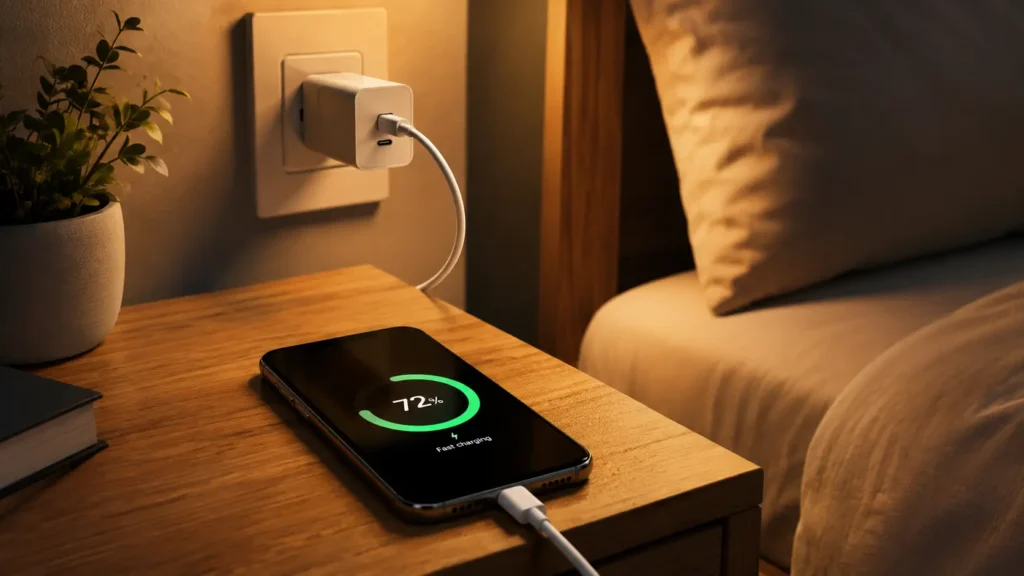
A fast charger promises one simple thing. Less time waiting. More time using your phone. Plug in for fifteen minutes, and you’re back to a usable battery instead of a dead screen.
That promise is real. It also comes with real fine print. Not every fast charger works with every phone. Not every fast charger on the market is even safe. Some genuinely speed things up. Others barely beat a standard charger, despite bold claims on the box.
This guide breaks down how a fast charger works. It covers which standards actually matter. It shows you how to pick one that’s fast and safe for your specific phone. We’ll also cover the warning signs that a charger, not your phone, is the real problem.
What Is a Fast Charger, Really?
A standard USB charger delivers around 5 watts of power. A fast charger delivers far more. Often 18 watts. Sometimes 25 watts or higher. The exact number depends on the standard it supports.
More watts means more energy reaches your battery every minute. That shortens the time you spend plugged in. Wattage comes from two numbers working together: voltage and amperage. A fast charger raises one or both above what a basic charger sends.
Your phone and the charger talk to each other the moment you plug in. This happens in a fraction of a second. They agree on the highest safe power level both sides support. The phone always sets the ceiling. That’s what keeps fast charging safe under normal conditions.
How a Fast Charger Decides the Right Speed
Every fast charger and phone pair runs a quick digital handshake at connection. The charger asks what the device supports. The phone answers with its maximum safe voltage and current. The charger then locks in that agreed level for the session.
This handshake repeats throughout charging as the battery fills. Many fast chargers slow down gradually as the battery nears full. This protects long-term battery health. It’s also why the first 50% often charges much faster than the last 20%.
Fast Charger Standards: USB Power Delivery Explained
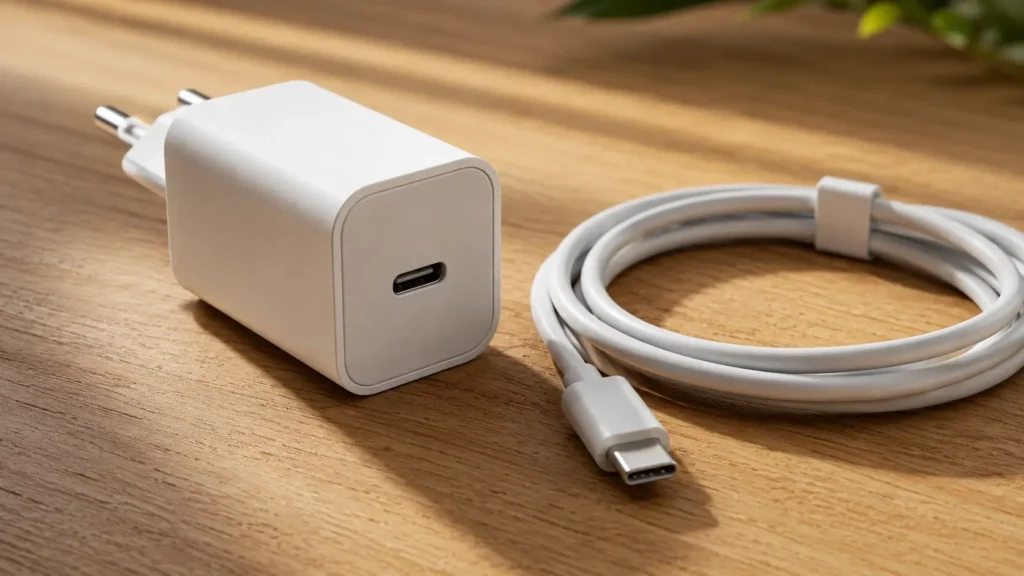
USB Power Delivery, usually shortened to USB PD, is the most widely adopted fast charging standard today. The USB Implementers Forum developed PD as an open standard. It’s built directly into the USB-C connector itself.
Older proprietary systems locked you into one brand. PD works differently. It works across phones, tablets, laptops, and other devices from many manufacturers. One PD charger can cover your entire household of devices, not just one phone brand.
PD chargers scale widely. Some handle modest phone-charging speeds. Others push past 100 watts for laptops and larger gear. Apple, Google, and Samsung all support PD in their current phone lineups. That makes PD the safest default pick if you only want to buy one charger.
Fast Charger Standards: Qualcomm Quick Charge Explained
Qualcomm Quick Charge, often shortened to QC, came before USB PD. It remains common across the Android world. Qualcomm’s official Quick Charge page describes a technology built into many Snapdragon processors. It lets supported phones negotiate faster charging speeds with a compatible charger.
Quick Charge has moved through several generations. Each one charges faster and runs more efficiently than the last. Later versions added cross-compatibility with USB PD. A modern QC charger often works fine with PD devices too, and the reverse holds as well.
Older QC 2.0 and 3.0 chargers work differently, though. They may not reach full speed on a phone built only for PD. Checking your phone’s exact standard before buying saves real frustration later.
Proprietary Fast Charging Systems
Some manufacturers build their own fast charging systems on top of the open standards. Samsung calls its version Super Fast Charging. OnePlus uses Warp Charge and SuperVOOC. Apple runs its own fast charging profile for iPhone models.
Most of these systems still lean on USB PD or Quick Charge underneath. The brands add extra negotiation steps on top. This lets their own chargers and cables unlock the fastest possible speed for that specific phone.
A generic PD charger still charges these phones quickly. It just won’t always hit the absolute peak wattage the brand advertises on its own charger box.
Fast Charger Wattage by Phone Type
Wattage needs vary a lot across phone brands and models. Most current iPhone models support fast charging in the 20 to 30 watt range through USB PD. Many Samsung Galaxy flagship models support 25 to 45 watts through Super Fast Charging. Google Pixel phones typically support 20 to 30 watts through USB PD.
Buying a charger rated well above your phone’s actual limit doesn’t hurt anything. It just means the extra wattage capacity goes unused for that specific device. Buying a charger rated below your phone’s limit caps your charging speed at the charger’s lower number instead.
Fast Charger Cables Matter Just as Much
A powerful fast charger paired with a weak cable rarely performs the way you’d expect. Thin, low-quality cables can’t safely carry higher current. They bottleneck the connection even when the charger and phone both support high wattage.
Look for cables explicitly rated for your charger’s wattage. USB-C to USB-C cables built for higher power delivery typically list their wattage rating directly on the packaging. A cheap, unmarked cable is one of the most common reasons a fast charger underperforms.
GaN Chargers: A Newer, Smaller Option
Gallium nitride, shortened to GaN, is a newer charger material replacing older silicon designs. GaN chargers run cooler and pack more power into a much smaller physical size. A GaN fast charger the size of a standard charger can often output far more power than an older silicon model of the same size.
This matters for travelers and anyone juggling multiple devices. A single small GaN charger can now replace several bulkier chargers in a travel bag, often at similar speeds across each connected device.
How Long Does Fast Charging Actually Take?
Real-world charging time depends on your phone’s battery size, its supported wattage, and the charger and cable you use. Many modern phones reach 50% charge in roughly 15 to 30 minutes with a properly matched fast charger. Reaching a full 100% takes noticeably longer, since charging speed slows as the battery nears capacity.
This slowdown near the top isn’t a flaw. It’s a deliberate safety feature built into nearly every modern fast charging standard, designed to protect the battery from unnecessary stress during the final charging stretch.
Does a Fast Charger Damage Your Battery?
This question comes up constantly. The honest answer: rarely, when everything is set up correctly. Modern fast chargers include built-in thermal and voltage protections. These prevent the kind of stress that worried early smartphone owners years ago. The handshake process described earlier exists specifically to keep charging within safe limits.
Heat is the real long-term concern, not the charging technology itself. Charging in direct sunlight adds heat. So does charging under a thick phone case, or inside a hot car. Repeated heat exposure does shorten battery lifespan over years of use.
Removing your case while fast charging helps. Avoiding hot environments helps even more. Both steps protect your battery far better than avoiding fast charging altogether.
Wireless Fast Charging Explained
Wireless charging uses the Qi standard to transfer power through a pad, with no cable connection needed. The Wireless Power Consortium maintains this standard across manufacturers. Standard wireless charging moves slower than a wired fast charger. Wireless fast charging modes now close much of that gap for many current phones.
Alignment matters enormously here. A phone positioned slightly off-center on a wireless pad can charge much slower. Sometimes it stops charging entirely, even on an expensive wireless fast charger. Thick cases or metal phone accessories can block the charging signal completely too.
How to Spot a Safe Fast Charger
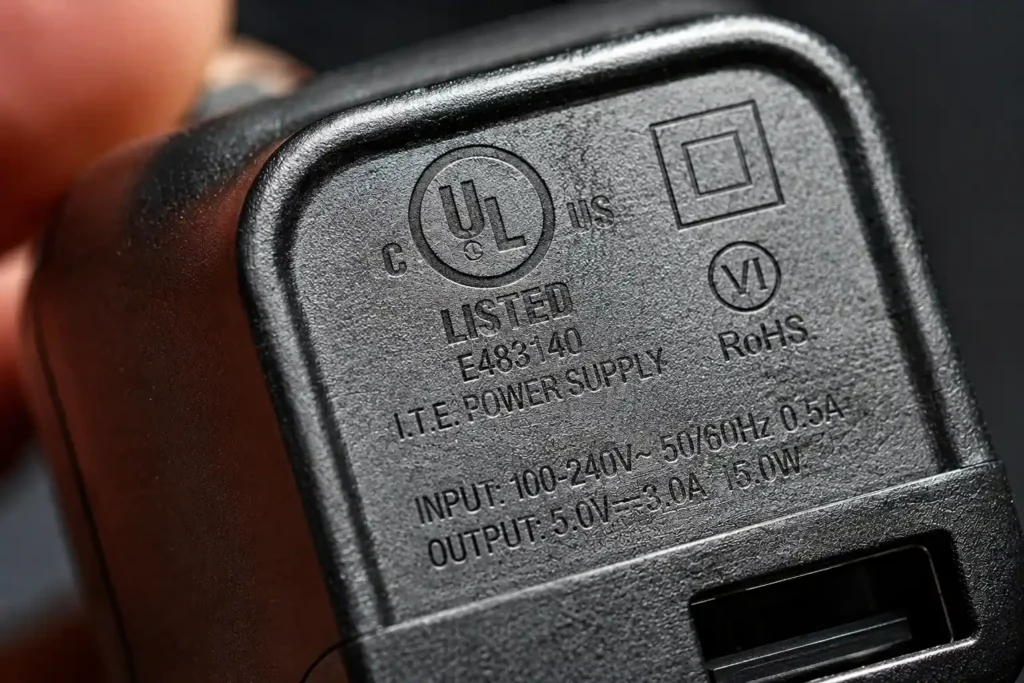
Not every fast charger sold online meets basic safety standards. This risk is real, not theoretical. The U.S. Consumer Product Safety Commission has issued public warnings about counterfeit and poorly built chargers. Its product safety warnings page documents recalls tied to overheating, arcing, and battery fires from unsafe chargers.
A few habits protect you here:
- Look for real safety certification marks, like UL. Inspect them closely. Counterfeit marks often look blurry, or come as a cheap sticker instead of a molded stamp.
- Avoid extremely cheap, unbranded chargers. Watch especially for products with no manufacturer information listed anywhere.
- Buy from established retailers or the phone manufacturer directly. Skip unknown third-party marketplace sellers when possible.
- Check for a model number and clear wattage rating. Legitimate chargers list this information plainly on the device itself.
Signs Your Fast Charger Might Be Causing Problems
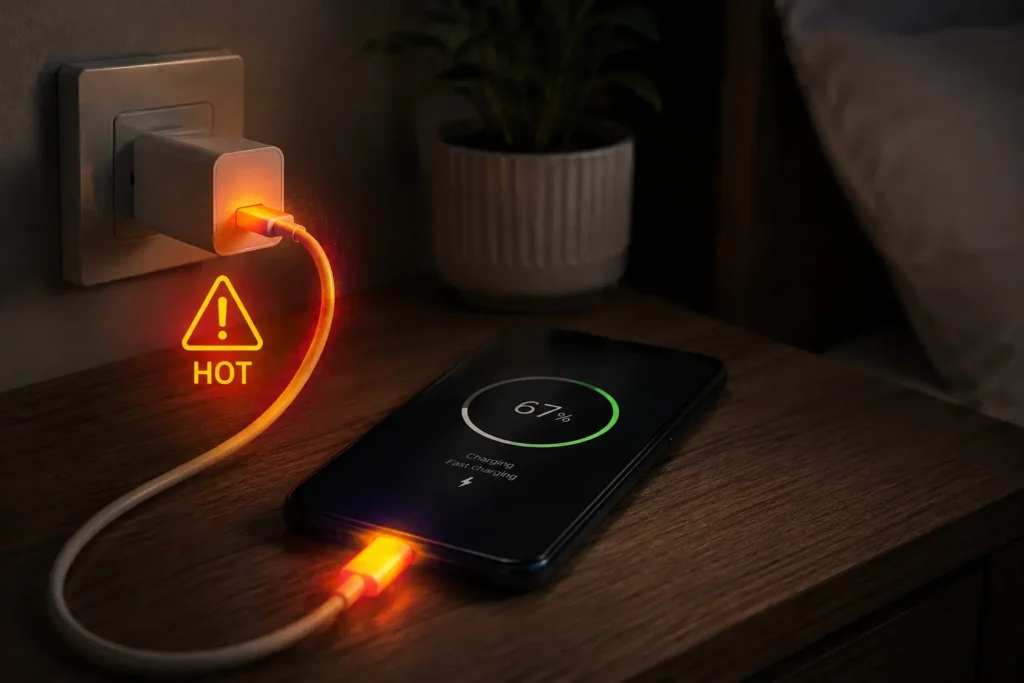
A failing or incompatible fast charger often mimics symptoms people blame on the phone itself. Watch for a charger or cable that feels unusually hot during normal use. This points to a real electrical issue, not normal operation.
Charging that starts and stops repeatedly is another warning sign. This happens even with a properly seated cable sometimes. It often traces back to a failing charger rather than the phone’s port.
Already ruled out the charger, and still seeing trouble? The phone’s charging port itself may be dirty or damaged instead. Our detailed guide on dirty charging port vs. damaged charging port walks through exactly how to tell the difference.
Common Fast Charger Myths
Myth: A more powerful charger always charges faster. Reality: your phone caps the power it accepts. A 65-watt charger on a 25-watt phone still charges at 25 watts, not faster.
Myth: Fast charging always damages your battery. Reality: modern fast chargers include real safety protections. Heat management matters far more than raw charging speed.
Myth: Any USB-C charger works the same as any other. Reality: cable quality, wattage rating, and standard compatibility all affect real-world charging speed.
Myth: Wireless charging is always slower than wired charging. Reality: many current phones support wireless fast charging modes. These come close to matching a basic wired fast charger.
Choosing the Right Fast Charger for Your Phone
Start with your phone’s supported standard. You can usually find this in the manufacturer’s official specifications page. Match that standard when shopping, whether it’s USB PD, Quick Charge, or a brand-specific system.
Buy a cable rated for the charger’s full wattage. An underrated cable bottlenecks even the best charger on the market. Stick with recognized brands and visible safety certifications, not just the cheapest search result.
A slightly higher price upfront is a small cost. Compare that to a charger that damages your phone, or in rare but real cases, becomes a fire risk in your home. A safe, well-matched fast charger pays for itself many times over in reliability alone.
A Short History of Fast Charging
Early smartphones charged at just a few watts, and a full charge easily took two to three hours. Qualcomm introduced its first Quick Charge standard in 2013, aiming to cut that wait time significantly. The USB Implementers Forum followed with USB Power Delivery in 2015, built specifically around the new USB-C connector.
These two standards competed for years across different phone brands. Over time, most manufacturers converged on USB PD as the common foundation, even when they layered their own branding on top. This shift is why a single modern charger now works reasonably well across most phone brands, something that wasn’t true a decade ago.
Fast Chargers for Laptops and Tablets
USB PD wasn’t built for phones alone. Its higher wattage ceiling, often 65 watts, 100 watts, or more, makes it suitable for laptops and tablets too. Many modern laptops now charge through the same USB-C port used for data transfer and monitor connections.
This shared standard means one high-wattage PD charger can often power your phone, tablet, and laptop, just not always at the same time from a single port. Multi-port PD chargers solve this by splitting power intelligently across several connected devices at once, though each device charges a bit slower when sharing.
Multi-Port Fast Chargers Explained
A multi-port fast charger lets you charge several devices from one wall outlet, which cuts down on cable clutter around your desk or nightstand. These chargers distribute their total wattage across active ports, so plugging in a second device can slow down the first one somewhat.
Check the charger’s per-port wattage rating before assuming every port hits full speed at once. Many multi-port chargers list a combined maximum wattage rather than a full rating for each individual port. Reading this fine print helps you set realistic expectations before you buy.
Fast Charger Certifications Worth Recognizing
A few certification marks carry real weight when you’re evaluating a fast charger’s safety. UL certification, from Underwriters Laboratories, involves independent testing for fire, shock, and overheating risks. CE marking indicates a product meets European safety and environmental standards, and it appears on many chargers sold internationally.
Manufacturer-specific certifications matter too. A charger labeled “Made for iPhone” (MFi) or officially licensed for Quick Charge or USB PD has passed additional compatibility and safety testing beyond baseline requirements. None of these marks guarantee perfection, but their presence signals a real testing process behind the product, unlike an unmarked charger with no traceable manufacturer at all.
Fast Charging and Travel
Fast chargers earn their keep especially while traveling. A short layover charge, or a quick top-up before a long flight, benefits enormously from a proper fast charger and cable. GaN chargers shine here too, since their compact size and multi-device support replace what used to require several bulky adapters.
International travelers should also confirm voltage compatibility separately from charging standard compatibility. Most modern USB PD and Quick Charge chargers handle the voltage differences between countries automatically, but a physical plug adapter is still often necessary for the outlet shape itself.
Fast Charger Buying Checklist
Before you buy, run through this short list. It covers the details that actually determine whether a fast charger performs the way its packaging promises.
- Confirm your phone’s supported charging standard. Check the manufacturer’s official spec page rather than guessing.
- Match the charger’s wattage to your phone’s limit. Buying higher wattage than needed is fine, but buying lower caps your speed.
- Buy a cable rated for that same wattage. A mismatched cable undoes even a well-chosen charger.
- Check for visible safety certifications. Look for UL, CE, or a clearly stated manufacturer name and model number.
- Read recent buyer reviews before purchasing. Real-world charging speed reports often reveal issues a spec sheet won’t show.
This short checklist takes only a few minutes to work through. It saves real money and real frustration compared to guessing at the store shelf or scrolling past dozens of similar-looking listings online.
Fast Charger Care and Maintenance
A little care extends any fast charger’s working life. Avoid wrapping the cable tightly around the charger body for storage, since this stresses the cable near the connector over time. Keep the charger’s prongs and your outlet clean and free of dust buildup.
Unplug the charger when it’s not actively charging something, especially during storms or power surges. Inspect the cable periodically for fraying near either end, since a damaged cable is both a performance issue and a safety risk worth addressing right away.
Fast Chargers for Cars and Portable Use
Car chargers plug into a 12-volt outlet and work differently from wall outlets in terms of power delivery. Many modern car fast chargers still support USB PD or Quick Charge, letting your phone charge quickly during a commute or road trip. Check your specific car charger’s wattage rating the same way you would for a wall charger.
Portable power banks add another layer worth understanding. A fast-charging power bank needs to support the same standard as your phone, just like a wall charger does. A high-capacity power bank without fast charging support will still charge your phone, just slower than its capacity might suggest at a glance.
Buying a portable charger for travel or emergencies works best when you match it to your phone’s standard first, then compare battery capacity second. A powerful fast charging power bank with too little capacity still leaves you searching for an outlet sooner than expected.
Fast Charger and Device Repair Help in Raleigh, NC
Did a fast charger leave your phone’s port damaged? Not sure whether it’s the charger, the cable, or the phone causing your trouble? Quick Phone Repair & Designs offers free diagnostics at both our North Raleigh and South Raleigh locations. We test charging issues thoroughly before recommending any repair.
We serve Raleigh, Garner, Wake Forest, Knightdale, Cary, Durham, Apex, Clayton, Morrisville, and the surrounding Triangle area. Walk-ins are welcome. You can also book an appointment online or get an instant quote before your visit.
North Raleigh: 3111 Leland Dr, #110, Raleigh, NC 27616 — (919) 295-1397 South Raleigh: 6213 Rock Quarry Rd, #106, Raleigh, NC 27610 — (919) 307-8600
Charging trouble often shows up alongside other device issues. Check our guides on common iPhone screen problems, Samsung Galaxy problems, and Google Pixel problems for more on what else might be going on with your device.
Frequently Asked Questions
What makes a charger a fast charger?
A fast charger delivers more power than a standard 5-watt USB charger. It usually relies on a standard like USB Power Delivery or Qualcomm Quick Charge, letting compatible phones charge in a fraction of the usual time.
Can I use any fast charger with any phone?
You can plug in almost any USB-C charger safely. You’ll only get true fast charging speeds if the charger, cable, and phone all support a matching standard.
Is USB-C always a fast charger?
No. USB-C describes the connector shape, not the charging speed. A USB-C charger can still deliver only standard, non-fast power if it lacks PD or another fast charging standard.
Does using a fast charger shorten my phone’s battery life?
Not meaningfully under normal conditions. Heat during charging causes most long-term battery wear, not the charging speed itself. Keep your phone cool and case-free while it charges for the best results.
How do I know if my fast charger is unsafe?
Watch for missing certification marks, no listed wattage or model number, unusually low pricing, and a charger or cable that gets hot during normal use.
Why isn’t my phone charging as fast as advertised?
Check that your cable supports the charger’s full wattage. Confirm your phone actually supports the charger’s exact standard. Rule out a dirty or damaged charging port as the real cause too.